
Pastoral Letter 2026
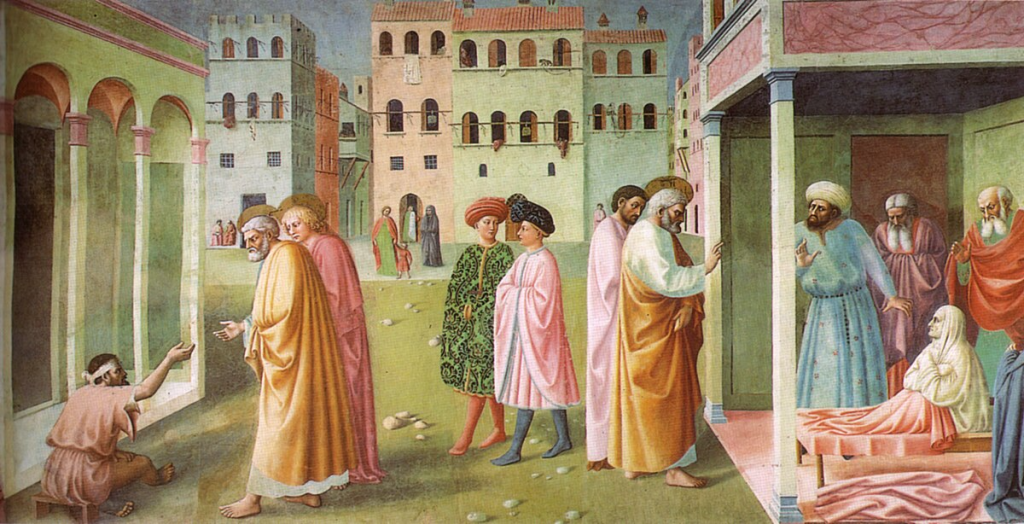
“I have neither silver nor gold, but what I do have I give you: in the name of Jesus Christ the Nazorean, rise and walk” (Acts 3:6)
The Jubilee of Hope has come to an end. It has been an intense year, rich in opportunities to grow in faith and discipleship, and therefore in mission. With this treasure of experience of God and fraternity, we face a new year of grace, reflecting as the Church in Mongolia on our identity and mission. Given the unique nature of our condition as a “young” Church, taking its first steps, we wish to draw inspiration from the experience of the early Church as described in the book of the Acts of the Apostles. It will be helpful to look at the first community of disciples, learn from their choices, and imitate them as we live our own “ecclesiogenesis.”
In particular, I propose focusing on the passage from Acts 3:1-10:
1 Now Peter and John were going up to the temple area for the three o’clock hour of prayer. 2 And a man crippled from birth was carried and placed at the gate of the temple called “the Beautiful Gate” every day to beg for alms from the people who entered the temple. 3 When he saw Peter and John about to go into the temple, he asked for alms. 4 But Peter looked intently at him, as did John, and said, “Look at us.” 5 He paid attention to them, expecting to receive something from them .6 Peter said, “I have neither silver nor gold, but what I do have I give you: in the name of Jesus Christ the Nazorean, [rise and] walk .7 Then Peter took him by the right hand and raised him up, and immediately his feet and ankles grew strong. 8 He leaped up, stood, and walked around, and went into the temple with them, walking and jumping and praising God .9 When all the people saw him walking and praising God, 10 they recognized him as the one who used to sit begging at the Beautiful Gate of the temple, and they were filled with amazement and astonishment at what had happened to him.
Lectio
- (vv. 1-3) Peter and John go up to the temple, a sign that the early Christian community had preserved the prayer traditions of the Judaism of the time. There, almost at the threshold, it is said that a sick man was carried, more precisely, a cripple, that is, unable to stand. He has no name; he is “a certain man,” from which we also understand the symbolic value. It could be us… His is a condition of great passivity: he is brought there every day to beg; that is, he lives in dependence. His identity seems fixed on that state. He cannot enter the temple for reasons of ritual purity; he is excluded from a relationship with God, or at least he feels that way. For him, others are opportunities to be exploited, potential givers of alms; his gaze is interested, functional. Even towards Peter and John.
- (vv. 4-8) Peter and John notice him. There is an exchange of glances: he sees them to ask something, they focus their attention on him, the one standing outside the temple, hunched over. The Church’s attention has been directed from the beginning to the excluded and the marginalized. And it is a gaze that distracts from the self-referential tendencies to which the eyes of the sick man had become accustomed. Peter and John, together, turn to him, asking him to look toward them, no longer simply in the hope of obtaining a few pennies, but for a true relationship. At this point Peter addresses him directly, with those all-important words: “Silver and gold I do not possess, but what I have I give you. In the name of Jesus Christ of Nazareth, arise and walk.” Peter declares his radical impotence; we are at the ninth hour, the hour in which Christ’s sacrifice on the cross was consummated, in total surrender to the Father. The Apostles know that this is their strength, not the resources the Master had expressly asked them not to accumulate (“Take no bag, no food, no money,” cf. Luke 9:3). Peter and John have nothing, but precisely for this reason they are free and know they have everything, because they are beloved sons, brothers to one another, sent by the Risen One to lift people from their state of radical prostration. Indeed, this is the invitation: “Rise and walk, in the name of Jesus Christ.” The name of Christ is their only wealth. And the gesture that follows confirms the word: Peter, “took him by the right hand and raised him up”. It is the verb of resurrection. That man can finally find the upright position that distinguishes him from all the living. His ankles, crippled from birth, are now able to support him, and he joyfully enters the temple: he can finally encounter God in his life. And it is a dance of joy: it is described as “leaping,” the same verb used in the Gospel of John to describe the gushing of living water in the hearts of believers.
- (vv. 9-11) The reaction of the bystanders is one of great amazement. They recognize him as the person everyone knew before and realize the miracle that has occurred. In the place of spectators, we are the readers of Scripture in the present moment of our history. It is important to recognize who we were before, to accept our past, and at the same time to be determined to pursue the change to which the Church invites us. The now formerly infirm man “held Peter and John close to him”: the encounter with the first believing community makes him understand the importance of remaining united with it, clinging to the apostles, true witnesses of the Risen One.
Practical consequences for Our Reality
Let us now try to apply the episode narrated in Acts to our reality. Indeed, we too are called to the same mission: the Church in Mongolia is now being born, as it was at the time of the first believing community in Jerusalem. Meditating on this passage seems to raise some fundamental questions worth reflecting on. These are scattered questions that arise spontaneously from understanding the text; they point to a path toward interiority, which demands to be undertaken with courage and sincerity, to arrive at an ever greater awareness of the delicate task that awaits us.
- First of all, how do we approach those we meet? Do we know how to honestly intercept others’ gaze? Can our eyes see our brother or sister in their true condition, or are we too busy with our routines that distract us from paying genuine attention to the other?
We know that our eyes, too, are often affected by functionalism: when we meet someone, we immediately tend to think how they can be useful to us. Perhaps the first time a believer approached the Church was precisely this way, to “get” something from that institution that was establishing itself in Mongolia. Then, however, we realize that attending Church solely out of opportunism leaves us like that sick man, passively waiting, without truly living. Do I work as a catechist or help out in another way in the parish because in the end they give me something, or do I experience this as a service, with the desire that others also know and deepen the faith that changed my life?
Even missionaries’ eyes can sometimes be clouded: viewing others as passive recipients of services our institutions feel compelled to provide, sometimes without the necessary discernment to assess their necessity or effectiveness. It does the Church in Mongolia credit to recognize that caring for those in need has been a priority since the pioneer missionaries’ first steps. From that attentive and caring gaze, many development and assistance projects were born, which then grew into long-term initiatives in which missionaries and collaborators are committed daily. Are we capable of looking into the eyes of the people who benefit from these projects, walking humbly with them, adapting services to their changing needs? Or do we detect a patina of habit and weariness in the fulfillment of these works?
- “Silver and gold I do not possess, but what I have I give you. In the name of Jesus Christ of Nazareth, arise and walk.” This is a question worth reflecting on at length. Do I approach the Church because I am attracted by its financial strength, or out of a genuine search for a relationship with God and with my brothers and sisters in the community? For missionaries, the question might be this: am I aware that people await an encounter with Christ, who sends me poor and defenseless into the world, or do I trust more in the means Providence places at my disposal to fulfill this mission? Sometimes it almost seems as if we intend to carry out the mission by proxy: I don’t get too involved and delegate to paid personnel the fulfillment of fundamental aspects, such as proclaiming the Word of God and listening to people, which should instead see me personally engaged. The end result, if we are honest, is that we have to admit that our participation in ecclesial initiatives, starting with the celebration of the sacraments, is not all that active and regular. At our Eucharistic assemblies, especially those during the week, attendance is limited to very few people, including paid people who work for the Church…
Looking at our ecclesial reality, it can be said that there is no shortage of structures. Each of them has a moving history of discernment, sacrifice, and satisfaction, as well as of much widespread good. The basic structures are there, but how do we inhabit them? Do they help us fulfill the ecclesial mission of making the experience of God’s mercy in Jesus Christ ever more concrete, or do they actually become a burden, a concern that risks slowing the fulfillment of that mission? Sometimes it almost seems as if in our mindset, the structures come first, and then the communities that inhabit them… Ecclesial experience, however, tells us the opposite: the believing community is born first, initially gathered in the simplicity of the places accessible at that time; then, as it grows, it becomes involved in the expansion of its own spaces, to the point of taking on the burden (including financial) of creating more suitable spaces. The apostles had nothing, but the community took root and grew, even in numbers. This should make us reflect.
In the early centuries, the believing community gathered in the homes of the faithful. This was the so-called domus ecclesiae, the “ecclesial house.” There were no structures of their own, largely due to persecution. Once a modicum of freedom of existence was achieved in ancient societies, they began to build their own places of worship, which very slowly took on their own typology—despite the diversity of contexts, but for centuries the life of the faithful progressed and developed in the humility of the faithful’s private homes. The point is not to a priori reject these structures, which clearly have their uses, but to respect the gradual growth of the believing community or the social services we offer the population.
There is also a practical criterion worth remembering: building is, in some ways, something that can be undertaken with the proper financial resources; but we must also consider the subsequent costs of maintaining the structure and the activities for which it is built. How much time and money we spend to secure the resources necessary for the numerous structures we have as a Church in Mongolia! At times, this effort can prove daunting, and we put our health at risk, encountering critical situations that often force us to withdraw or repatriate. Perhaps we could reflect more on the approach we intend to follow in fulfilling our mission. We are called to uplift and restore the dignity of everyone we encounter; we should be an outstretched hand to all people, especially those who suffer most. The mission of every baptized person is to be an instrument for the resurrection and healing of all those prostrate in pain or in a state of meaninglessness. It is a most noble mission, one that can never be forgotten. Above all, it cannot be overshadowed by the practical and functional issues related to the structures we have.
- Finally, looking at the reaction of those present at the scene at the “Beautiful Gate” of the temple, there is amazement and wonder at the miracle taking place before their eyes. In our lives as believers and missionaries, what space is there for wonder and praise? Are our eyes capable of grasping the ongoing miracle of faith, which leads everyone, believers and missionaries alike, to grow in following Christ and bearing witness to Him? Those who come to faith usually bring with them a good dose of enthusiasm, which enables them to face the challenges that the path of conversion always holds. However, if newcomers find themselves surrounded by disenchantment and frustration—or, even worse, internal quarrels and tensions—it may be that their enthusiasm will soon fade, and they will abandon the path they had courageously undertaken. We should all ask ourselves this: are our parish communities and religious houses meeting places where newcomers feel welcome, or are they closed circles where selection or even rejection prevails, even if only for convenience’s sake? Here too, we should be honest and do a sincere self-examination. The slow growth of the believing community may be linked to numerous factors, and it’s not the number we’re aiming for; but frankly, we may also be responsible for not providing the welcoming and benevolent environment that would encourage the inclusion of new people or the return to practice of those who, for various reasons, have distanced themselves.
Another element of the final scene described in the biblical passage is the attachment the now-healed sick man shows toward Peter and John. This is natural, for the man has finally regained his upright position, leaving behind years of suffering and begging. The apostles, however, immediately make it clear that they are not the protagonists of that healing, and they direct the sick man and those present to a deeper reflection, one that does not create dependence on them. Paul and Barnabas will do the same when they have to dissuade the crowd, rejoicing over the miraculous healing of a paralytic, from believing them to be the incarnation of Hermes and Zeus. In other words, the apostles are well aware of their own smallness, in which the power of the Risen One is at work, and they do not create dependence on themselves, but always refer to the person of Christ as the only one to whom they can truly cling.
And how do we interact with the communities we are called to lead? Is there self-absorption or a serene and humble detachment? It often happens that excessive tensions arise when missionaries are replaced; their relocation seems to completely undermine pastoral projects, even though they should work anyway, if they were done well. Here is another lesson from the passage we have examined: the humility and practical wisdom of the apostles, which do not create dependence, but promote the true good of people, leaving them free and encouraging them to follow Christ with their whole being.
Conclusion
“So the Church throughout all Judea, Galilee, and Samaria had peace, being built up, and walking in the fear of the Lord and in the comfort of the Holy Spirit, multiplied” (Acts 9:31).
This note is found in the book of Acts, after the account of Paul’s conversion. The situation of the early Church is constantly evolving; there are prodigious manifestations of the presence of the Risen One and constant trials that make the journey anything but smooth and peaceful. Yet, that community born in the fear overcome at Pentecost grows, strengthens, and takes root.
This is the hope we all have for our beloved Church in Mongolia, born from the sacrifice of so many, marked by trials and weaknesses, desiring to take ever deeper and deeper root. Reflecting on the questions that emerged from meditating on the biblical passage proposed for this year, elements will certainly emerge that will help provide answers that will help us journey together as a synodal Church. These elements will be revisited in preparation for next year’s pastoral letter, to outline some guidelines for our ecclesial life.
The commitment of each individual is fundamental. Let us feel united on this journey of reflection and continuous reorientation toward Christ, the light of the people, under the maternal gaze of Mary, our Heavenly Mother. May she, who agreed to draw ever closer, allowing her image to be found in a landfill, intercede for each of us, gently leading us to an encounter with her Son Jesus, to make us his enthusiastic and courageous witnesses.